

If you open your wardrobe and it’s black, navy, grey and maybe a bit of white, you’re not alone. Every spring you tell yourself this is the year you’ll finally wear more colour. Then Monday morning comes around and somehow you’re back in black again.
I’ve been styling women for 14 years, and this is one of the things I hear most. “Shannon, I’d love to wear more colour, I just don’t know what suits me anymore.” Or a client will pull out a gorgeous coloured top from the back of the wardrobe, and it’s still got the tags on it.
Here’s what I want you to know. It’s very rarely that a woman can’t wear colour. It’s usually that nobody has ever shown her which colours are right for her, and how to wear them.
In this post I’ll walk you through how to wear colour with confidence this spring, using three simple steps you can start in your own wardrobe today. No big shopping trip, and no throwing out all your black. We’re going to work with what you’ve already got.
Why we keep going back to black
Black is easy to buy. It’s in every store, it feels safe, and we’ve all been told it’s flattering. But black doesn’t suit everyone.
You’ve probably had this happen. You see a beautiful bright top on the mannequin, bring it home, put it on, and something feels off. You look tired, or it feels too loud, or you can’t work out what to wear it with. So it goes back in the wardrobe and you reach for black again.
It’s not really about the clothes. It’s that you’ve lost the feeling of knowing what works for you. Black feels safe because it won’t go wrong, but safe can start to feel a bit flat as the weather warms up.

So let’s break it down.
Step 1: Find the colours that suit you
The first mistake I see is choosing colours based on how they look on the hanger, on the mannequin or on a friend. Nobody ever taught us to look at colour properly, so we judge it by whether we like it, not by what it does for us.
Instead, I want you to judge a colour by what it does to your face.
The right colour near your face makes your skin look fresher, your eyes look brighter and you look well rested. The wrong colour can make you look tired or washed out. That’s usually why the bright top never gets worn. It wasn’t the brightness. It was the wrong colour for you.
Try the window test
This is the exercise I give my clients, and you can do it this afternoon.
- Pull out every coloured piece you own. Anything that isn’t black, navy, grey, white or beige. Tops, knits, scarves, all of it. Lay them on the bed.
- Head to a window. Take three to five pieces to a mirror in natural daylight and turn the overhead lights off. Daylight gives you the most honest answer.
- Hold each piece under your chin. One at a time, with your hair pulled back if you can.
- Look at your face, not the fabric. Does your skin look brighter and smoother? Or do you notice shadows under your eyes, redness, or a slightly greyish look?
- Make two piles. “Near my face” and “away from my face”.
What to look for in the results
Once you’ve done a few, you’ll start to see a pattern. You might notice softer colours work better on you than bright ones. You might find warmer shades like coral and olive make you glow, while icy colours drain you, or the other way around.
That’s the start of knowing your colours. And it means the next time you shop, you’re not guessing.

Step 2: Start with one piece of colour at a time
The second mistake I see is going all in at once. You decide this is the season you’ll wear colour, so you put on a coloured top, a coloured pant and a printed bag on the same day. You look in the mirror, it feels like far too much, and you take it all off and go straight back to black.
When you’re used to neutrals, even a little colour feels loud. Going from zero to everything is a big jump, so your brain says, nope, let’s go with what’s safe.
Instead, start with one piece of colour per outfit. That’s it. Everything else stays neutral and you add one thing.
Easy ways to add one piece of colour
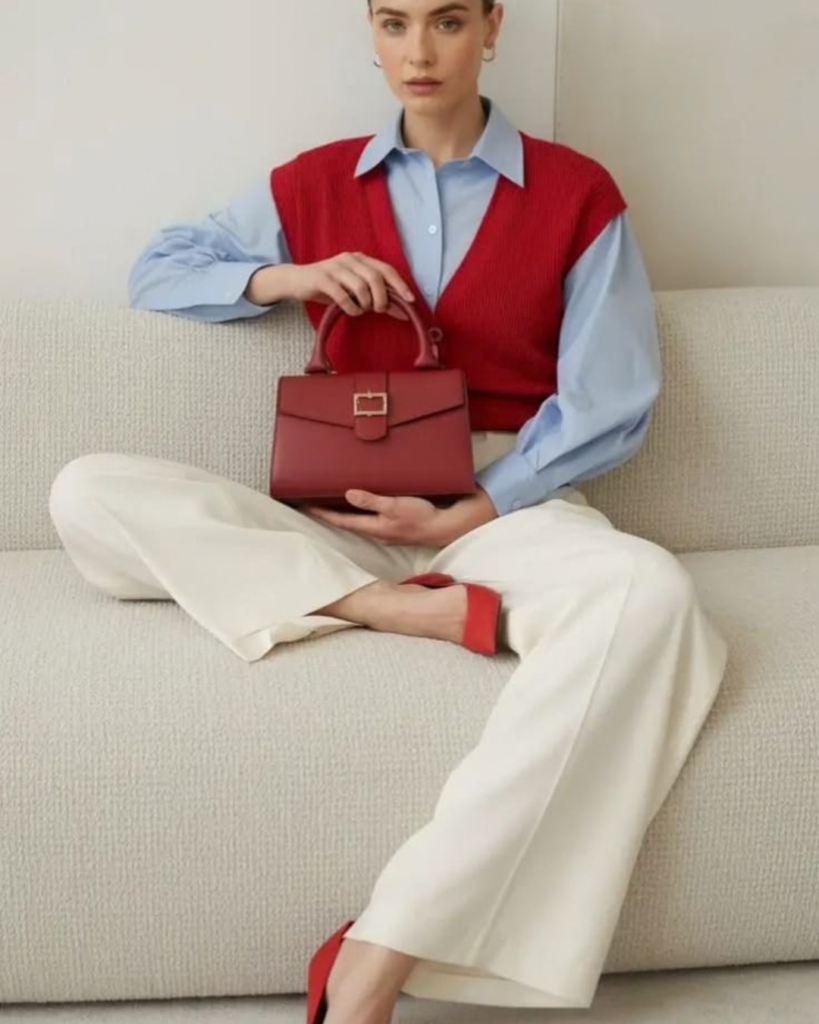
- An accessory: a scarf, a pair of earrings, a bag or a shoe
- One piece of clothing: a knit, a top or a light jacket
Once that feels normal, try a larger coloured piece. Small steps build confidence faster than one big leap.
Love a colour that didn’t pass the window test?
Here’s a tip I love. If a colour landed in your “away from my face” pile but you really love it, you can still wear it. Just wear it away from your face. A coloured skirt, a pant, a shoe or a bag. You still get to enjoy the colour, without it draining you.
Step 3: Wear colour with the neutrals you already own
The third mistake I see is thinking you need a whole new wardrobe to wear colour. So you buy coloured pieces that don’t go with anything you own. They sit there on their own, and your neutrals start to feel boring.
Instead, think of your neutrals as the foundation and use colour to bring them to life. Here are two easy formulas that work on almost everyone.
Formula one: your favourite neutral plus one colour
Your neutral does the work, and the colour gives it life. A few combinations to try this spring:
- Navy with soft pink
- Cream with coral
- Denim with a warm green
- Grey with soft lilac
Start with the neutral you already wear most, then add one colour from your “near my face” pile.
Formula two: tonal dressing
Tonal dressing means wearing different shades of the same colour together. Think a pale blue shirt with a deeper blue pant, or a cream knit with a camel trouser.
It looks considered and put together, and it’s really forgiving while you’re still building confidence.
A real client example
I had a client who wore black all the time. She bought it because it was easy to find in the stores, and she honestly thought it was flattering on her. But black wasn’t one of her colours, and it was washing her out.
So I showed her the colours that really suited her, and I didn’t have to convince her. She could see the difference for herself. Now she doesn’t wear black at all, she loves her colours, and she’s had lots of compliments on them. That feeling of loving what you see when you get dressed is what I want for you too.
Frequently asked questions
How do I know which colours suit me?
Hold different coloured pieces under your chin in natural daylight and look at your face, not the fabric. The right colours make your skin look brighter and smoother. The wrong ones bring out shadows, redness or a greyish tone. A professional colour analysis will give you your full palette.
Can I still wear black if it doesn’t suit me?
Yes. Wear it away from your face, as a pant, skirt or shoe, and put one of your best colours up near your face with a top, scarf or earrings.
What’s the easiest way to start wearing colour?
Add one piece of colour per outfit and keep everything else neutral. An accessory like a scarf or earrings is the lowest-risk place to start.
What is tonal dressing?
Tonal dressing is wearing different shades of the same colour in one outfit, like pale blue with deeper blue, or cream with camel. It looks polished and is an easy way to wear colour without it feeling loud.
Your next step
If you take nothing else from this post, remember these three things:
- Judge colour by what it does to your face, not how it looks on the hanger.
- Start with one piece of colour per outfit, and wear the colours you love but that don’t suit your face away from your face.
- Pair colour with the neutrals you already own, using neutral plus one colour, or tonal dressing.
Your action for today: pull out every coloured piece you own and do the window test with three to five of them.
And if you’d like my help working out exactly which colours are right for you, let’s talk. Book a free 25-minute Style Chat and we’ll look at where you’re stuck and work out your next step, whether that’s a few small changes, a colour analysis, or my Ultimate Style Makeover. No pressure, and I won’t push you to buy anything. I’m here to help.