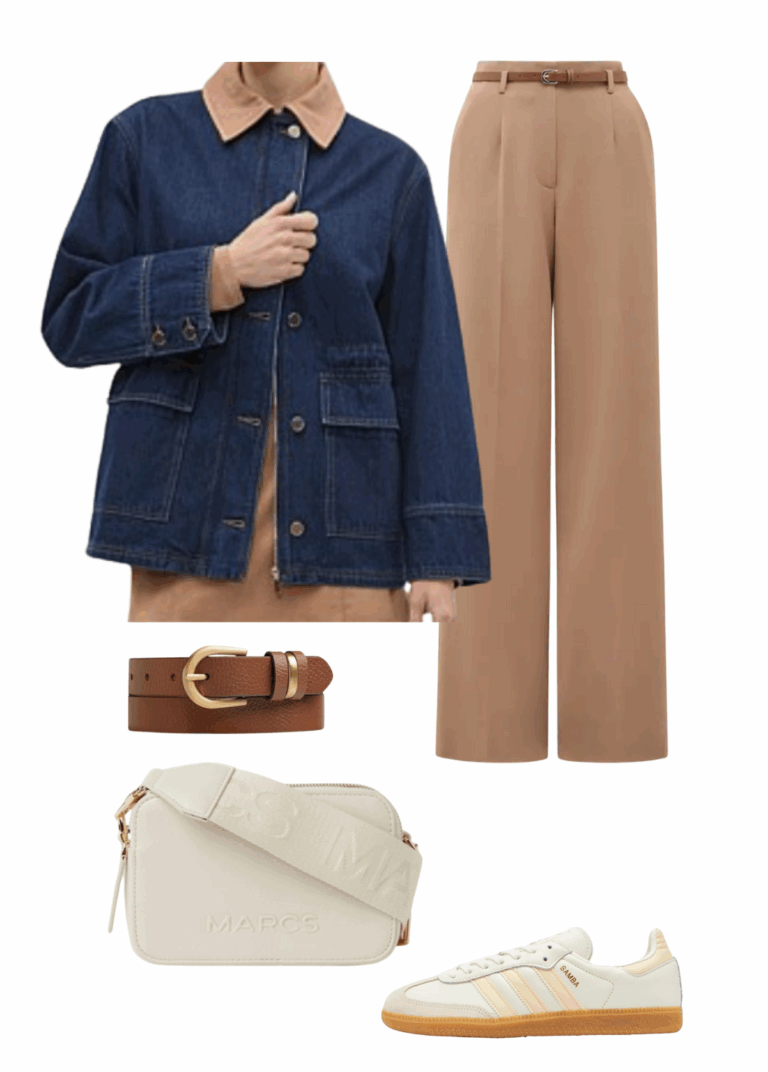


If you have pulled on your winter coat this morning and then found yourself sweating in it by 11am, you are not losing your mind, and you are not bad at getting dressed. You are living through the most confusing stretch of the wardrobe calendar: the winter to spring wardrobe transition.
Every year around this time, the same thing happens to almost every woman I work with. You stand in front of a full wardrobe and cannot work out if it is a jumper day or a t-shirt day. Your puffer jacket and boots are still sitting front and centre even though you have not reached for them in weeks. Maybe you picked up a couple of spring pieces on sale last year and they are still sitting in a bag, because you never quite worked out how to wear them.
Here is the good news. You do not need a new wardrobe to move from winter into spring. You need a few smart hacks that let the pieces you already own do double duty. That is exactly what this post walks you through.
Why Your Wardrobe Feels Stuck Between Winter and Spring
Right now, every time you get dressed, you are making a weather decision, not a style decision. It is cold when you leave the house and warm by lunchtime. You need layers at 7am that you do not want by midday. There is nothing wrong with your clothes. Your wardrobe just has not transitioned yet, and honestly, most of ours have not, because we are sitting right in the in between period.
This is not about waiting until it is warm enough to pack winter away completely. It is not about needing a whole new spring capsule before you feel put together either. It is about learning to read the pieces you already own differently.

The Three Reasons We Get Stuck Here Every Year
So why does this seasonal wardrobe transition trip up so many women, every single year, without fail?
The first reason is decision fatigue. Dressing for two seasons in one day is genuinely harder than dressing for one, so our brains default to whatever is easiest, which is usually just repeating winter on autopilot.
The second is habit. You have had months of reaching for the same jumpers and boots, and that pattern does not switch off just because the calendar changed. Your hands go to the same hangers before your brain has caught up.
The third, and the big one, is uncertainty. A lot of women do not actually know which pieces bridge both seasons, so they either overdress out of habit or underdress and end up cold and uncomfortable by 2pm. Getting this right is less about willpower and more about having two or three go-to combinations ready, so you are not making a fresh decision every single morning. That is the part that actually saves you time and mental energy.
The Simple Question That Fixes Your Spring Transition
Here is what I want you to start asking yourself each morning: what can I layer off by lunchtime?
Break that question down into three parts.
Find Your Base Layer
What is the piece that works on its own once you lose the jacket or the jumper? This is your foundation, the layer that still looks finished and pulled together with nothing over the top of it. If you cannot answer this straight away, that is the first gap to close.
Add One Transitional Layer
What is one piece you can add or remove in thirty seconds, like a light knit or a shirt? This is the layer doing the real work of the winter to spring wardrobe transition. It needs to be quick to take off in the car, at your desk, or on the walk into a meeting, without unravelling your whole outfit.
Choose Shoes That Work Both Ways
What shoes work with both a heavier outfit and a lighter one, so you are not changing your entire look twice a day? A good transitional shoe means you are only solving half the outfit puzzle each morning instead of the whole thing.
This is the easiest way to bridge the seasons, because you are not building two separate wardrobes for two separate seasons. You are building outfits with an exit strategy built in.
A Real Example: One Jumper, Two Seasons
Let me show you how this actually plays out. Say you own a simple midweight jumper, a shirt, straight leg jeans and white sneakers. Nothing fancy, nothing new.
In the depths of winter, that jumper is your whole outfit, worn under a coat. But right now, in this in between stretch, try wearing the shirt underneath it instead of on its own. At 7am, when it is cold, the jumper stays on and you are warm and put together. By 11am, when it warms up, the jumper comes off, and you are left with a shirt and jeans that still look finished. Not like you have just stripped a layer off in the car and hoped for the best.
Same jeans, same sneakers, same ten minutes getting dressed. One small change, and suddenly that jumper is not a winter only piece anymore. It has become a spring transition piece too. That is the whole hack. You are not shopping for spring. You are re-reading the clothes you already own.
Your Winter to Spring Wardrobe Challenge
Here is your challenge for this week. Pick three of your heaviest winter pieces, the ones you have been wearing on autopilot without thinking, and for each one, find a lighter layer you can wear underneath it.
While you are doing it, ask yourself this: if I had to take this off by lunchtime, would I still look put together underneath? If the answer is no, that is the gap you need to fix. And that is exactly the kind of thing we work through together on a styling call.

Frequently Asked Questions
How do I transition my wardrobe from winter to spring without buying anything new?
Start by identifying your heaviest winter pieces and finding a lighter layer to wear underneath each one. A jumper worn over a shirt instead of on its own, for example, becomes a piece you can peel back to a lighter outfit by midday, rather than a piece you retire until next winter.
What are the best transitional pieces for changeable weather?
Look for midweight knits, button up shirts, and light jackets that can be added or removed quickly. The best transitional pieces are the ones that still look finished on their own, not just as part of a bigger layered outfit.
How many layers should I wear during the winter to spring transition?
Most outfits work well with two to three layers: a base layer that stands alone, one transitional layer you can remove in under a minute, and shoes that suit both a heavier and a lighter version of the outfit.
What shoes work for both winter and spring outfits?
A clean white sneaker or a simple leather flat tends to bridge both seasons well, since it is neutral enough to pair with a heavier layered look in the morning and a lighter one by afternoon.
When should I start transitioning my wardrobe to spring in Australia?
In most parts of Australia, late August into September is when mornings and afternoons start to genuinely diverge in temperature, which is exactly when this kind of layering strategy starts to earn its keep.
It Is One Wardrobe, Not Two
This week’s lesson really comes down to this: it is not about having a winter wardrobe and a spring wardrobe. It is about having one wardrobe that flexes with your day.
If you are finding it hard to work out which pieces in your own wardrobe can actually bridge these seasons, that is exactly what we map out together on a styling call. Book a call with me and let’s unlock your styling formula, so you are never standing in front of your wardrobe confused again.